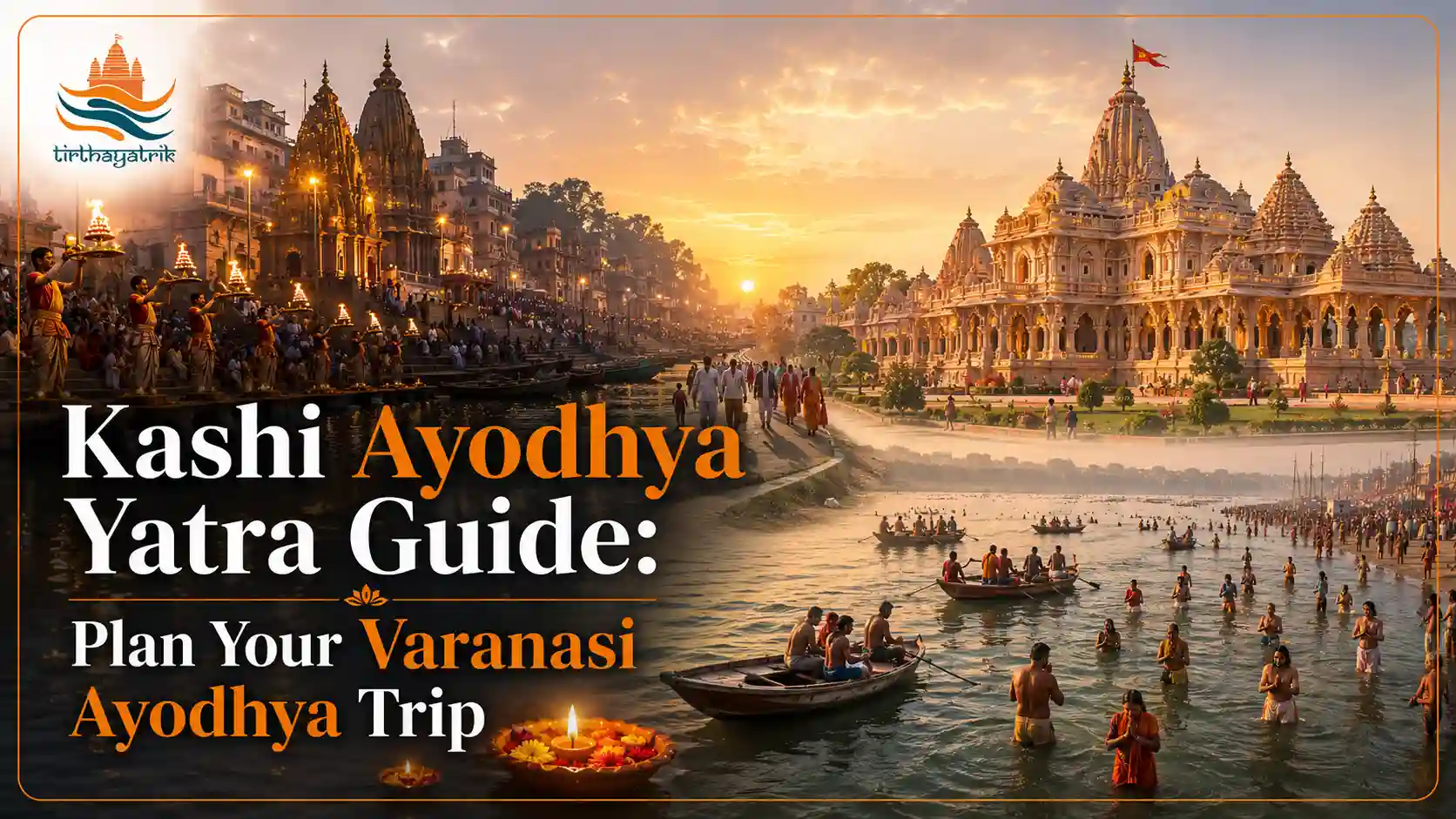
Kashi Ayodhya Yatra Guide: Plan Your Varanasi Ayodhya Trip
A Kashi Ayodhya Yatra connects two of North India's most devotional cities — Varanasi, the city of Shiva and the Ganga ghats, and Ayodhya, the birthplace of Lord Rama — in a single, well-paced trip. Most itineraries run 2 days and 1 night, cover Kashi Vishwanath darshan, an evening Ganga Aarti and boat ride in Varanasi, and Ram Janmabhoomi darshan in Ayodhya, with private AC transfers handling the road journey between the two cities.
Why Choose This Yatra
A Kashi Ayodhya Yatra works because it pairs two forms of devotion that complement rather than compete with each other. Varanasi gives you the ritual rhythm of the ghats — the boat ride at dawn, the diyas floating on the Ganga, the evening aarti at Dashashwamedh Ghat — while Ayodhya gives you the focused, temple-centred experience of Ram Janmabhoomi darshan. Travelling both in one trip means you're not choosing between two pilgrimages, you're completing one connected journey.
This is also one of the more time-efficient circuits in Uttar Pradesh's pilgrimage map. Since Varanasi and Ayodhya are joined by a manageable road distance, a 2-day, 1-night itinerary is enough to cover the core darshan in both cities without feeling rushed. That's part of why this has become one of the more searched pilgrimage combinations for travellers planning a short weekend trip or a quick spiritual break from a longer holiday.
Spiritual Significance of Kashi and Ayodhya
Kashi, or Varanasi, is regarded as one of the holiest cities in Hinduism, closely tied to Lord Shiva and the idea of moksha. Pilgrims believe that darshan at Kashi Vishwanath Temple, followed by a dip in the Ganga, carries a spiritual weight unmatched by almost any other site in the country. The city's ghats, particularly around sunset, hold a ritual continuity that has stayed largely unbroken for centuries.
Ayodhya, on the other hand, is revered as the birthplace of Lord Rama. The Shri Ram Janmabhoomi Temple has become an increasingly central pilgrimage destination in recent years, drawing devotees from across India who want to complete darshan at what is considered the physical site of Rama's birth. For a growing number of travellers, Ayodhya isn't a secondary stop — it's the primary reason the whole trip gets planned.
What makes a combined Kashi Ayodhya Darshan meaningful is the contrast between the two experiences. Varanasi's devotion is expressed through the river — the boat rides, the floating diyas, the ghats at dawn and dusk. Ayodhya's devotion is expressed through the temple itself — the queue for darshan, the story of Rama's life woven into every shrine in the city. Moving from one to the other in a single trip gives pilgrims a fuller sense of two very different, equally powerful traditions within Hindu worship.
Places Covered on the Yatra
A typical Kashi Ayodhya Yatra covers temple darshan, an evening Ganga Aarti, and a boat ride in Varanasi, followed by Ram Janmabhoomi and related temple visits in Ayodhya. Exactly which stops are included can vary slightly by operator and duration, so it's worth checking the day-by-day plan before you book.
Varanasi
Kal Bhairav Temple, Durga Kund, Tulsi Manas Mandir, Sankat Mochan Hanuman Temple, and Bada Ganesh Mandir typically make up the darshan circuit here, alongside a boat ride from Assi Ghat toward Namo Ghat and the evening Ganga Aarti at Dashashwamedh Ghat. Many pilgrims visit Kal Bhairav first, since local tradition treats him as the city's guardian deity, before continuing on to Kashi Vishwanath Temple the following morning when the queues tend to be shorter. The boat ride is usually timed close to sunrise or just before the evening aarti, when the ghats are at their calmest and most photogenic.
Ayodhya
The Shri Ram Janmabhoomi Temple is the centrepiece of the Ayodhya leg, along with Hanuman Garhi and Kanak Bhavan Temple. Hanuman Garhi is generally visited first, since it sits along the route to Ram Janmabhoomi and is considered an essential stop of its own, while Kanak Bhavan, associated with Sita and Rama, draws a steady flow of devotees through the day. Some itineraries also build in time for Dashrath Mahal, depending on how the day is paced.
Suggested 2-Day Itinerary
A 2-day, 1-night itinerary is the standard format for a Kashi Ayodhya Yatra, and it's enough time to cover the core darshan in both cities without feeling hurried. Day one is built around Varanasi's temples, ghats, and evening aarti; day two shifts focus to Kashi Vishwanath darshan in the morning before the drive to Ayodhya for Ram Mandir darshan.
| Day | Focus | Highlights |
|---|---|---|
| Day 1 | Arrival & Varanasi Darshan | Pickup from Varanasi railway station or airport, hotel check-in, Kal Bhairav, Durga Kund, Tulsi Manas Mandir, Sankat Mochan Hanuman Temple, Bada Ganesh Mandir, boat ride from Assi Ghat, evening Ganga Aarti at Dashashwamedh Ghat |
| Day 2 | Kashi Vishwanath & Ayodhya | Early morning Kashi Vishwanath and Annapurna Temple darshan, drive to Ayodhya, Ram Janmabhoomi Temple, Hanuman Garhi, Kanak Bhavan, departure transfer |
If you have a little more time on hand, this same route can be extended into a 3-day version by adding a full extra day in Ayodhya or a Prayagraj Sangam stop on the way. TirthYatrik's Kashi Ayodhya Darshan package follows close to this exact 2-day structure, starting from ₹15,999 per person, and includes private AC vehicle transfers, intercity travel between Varanasi and Ayodhya, and the boat ride from Assi Ghat to Namo Ghat as part of the itinerary.
How to Go From Varanasi to Ayodhya
Varanasi and Ayodhya are roughly 200 kilometres apart, and the road journey between the two typically takes around 4 to 5 hours depending on traffic and the route taken. This is close enough that most Kashi Ayodhya Yatra itineraries build the transfer into the second day itself, rather than treating it as a separate travel day.
| Mode | Details |
|---|---|
| By Road | Private vehicle transfer between Varanasi and Ayodhya generally takes 4-5 hours; most packages include this as part of the itinerary |
| By Train | Both cities are connected by rail, with several daily services; check current routes and timings on IRCTC |
| By Air | Ayodhya's own airport has opened up direct flight connectivity in recent years, in addition to Varanasi's existing airport |
Booking a package that includes intercity transfers takes this decision off your plate entirely — a private AC vehicle handles the Varanasi to Ayodhya leg directly, so you're not comparing train timings or negotiating a cab once you're already mid-trip. Most operators, including TirthYatrik, also offer pickup from the Varanasi railway station or airport, so the yatra effectively starts the moment you land or arrive by train.
Best Time to Visit
The best time for a Kashi Ayodhya Yatra is between October and March, when cooler weather makes both the Varanasi ghats and Ayodhya's temple queues far more comfortable to navigate. Festival periods such as Ram Navami in Ayodhya and Dev Deepawali in Varanasi draw significant crowds and are worth planning around depending on whether you want the celebration atmosphere or a quieter darshan.
| Season | Months | What to Expect |
|---|---|---|
| Winter (Best time) | October – March | Cool, pleasant weather; comfortable for temple darshan, boat rides, and the road transfer to Ayodhya |
| Summer | April – June | Hot and humid; early morning darshan is recommended, and midday road travel is best avoided where possible |
| Monsoon | July – September | Green surroundings but occasional heavy rain; river levels can affect ghat access and boat ride timings in Varanasi |
If you're timing your trip around a festival, it's worth checking dates for Ram Navami in Ayodhya and Dev Deepawali in Varanasi well in advance, since hotel availability in both cities tightens quickly as these dates approach.
Kashi Ayodhya Package Cost
A Kashi Ayodhya Darshan package typically starts from around ₹15,999 per person for a 2-day, 1-night itinerary, though the exact price depends on the season, hotel category, and group size. Packages built around a fixed private vehicle for the whole trip tend to work out cheaper per head for families or groups travelling together compared to a solo traveller booking the same route.
A few factors that generally influence the final price:
- Duration: a 2-day, 1-night trip costs less than a longer 3-day or multi-city itinerary that adds Prayagraj or Vindhyachal.
- Season: festival periods and peak winter months tend to push hotel and vehicle rates higher.
- Hotel category: the choice of accommodation for the Varanasi stay affects the overall package cost.
- Group size: since the private AC vehicle is priced for the trip rather than per traveller, larger groups usually see a lower per-person cost.
Most Kashi Ayodhya packages include the hotel stay, private AC vehicle, intercity transfers between Varanasi and Ayodhya, toll and parking charges, driver charges, and a guide, but exclude personal expenses, temple donations, entry tickets, local transport beyond the planned route, and meals. These exclusions are fairly standard across pilgrimage packages in this region, so it's worth budgeting separately for food and any donations you'd like to make at the temples. For current pricing and seat availability, it's best to check the Kashi Ayodhya Darshan package page directly, since departures and pricing can shift with demand.
Travel Tips
A short pilgrimage like this still benefits from a bit of planning. Keep these points in mind while preparing for your Kashi Ayodhya trip:
- Book early during festival season, when seats on popular departures and hotel rooms fill up quickly.
- Carry a valid ID proof at all times, especially for temple entry and railway travel.
- Keep the plan flexible, since darshan timings at Kashi Vishwanath and Ram Janmabhoomi can shift without much notice.
- Pack modest, comfortable clothing suited to temple visits, along with a light shawl for early morning boat rides and evening aartis.
- Since most packages exclude meals, budget for food separately across the two days.
- Confirm your pickup point and timing with the operator a day in advance, especially if you're arriving late at the Varanasi railway station or airport.
- If travelling with elderly family members, mention this while booking so rest breaks can be built into the day-two drive to Ayodhya.
- Carry basic devotional items if you plan to perform any personal rituals at the ghats or temples.
Why Book a Package Instead of Planning It Yourself
Planning a Kashi Ayodhya trip on your own means arranging a hotel in Varanasi, a vehicle for the intercity transfer, a guide who knows the local temple order, and separate transport in Ayodhya — all for a trip that's really only 2 days long. A package folds all of this into a single booking, which matters more than it seems when the actual travel window is this tight.
It also helps with timing. Ganga Aarti at Dashashwamedh Ghat, the morning boat ride, and Kashi Vishwanath darshan all work best at specific hours of the day, and getting even one of these wrong on a self-planned trip can mean missing the aarti slot or reaching Ayodhya's temples during the busiest part of the afternoon. A package built around local, on-ground experience is generally better positioned to sequence the day correctly.
There's also a practical comfort factor. A private AC vehicle for the Varanasi to Ayodhya leg means no negotiating with local transport mid-trip and no uncertainty about arrival timing at Ram Janmabhoomi. For first-time visitors, NRIs travelling back specifically for this darshan, or families with older members, that predictability often matters as much as the sightseeing itself.
Why Choose TirthYatrik
TirthYatrik puts together the Kashi Ayodhya Darshan itinerary with hotel stay, private AC vehicle, intercity transfers, toll and parking charges, and a guide handled end to end, so there's nothing left to coordinate separately once you land in Varanasi. The team's on-ground experience in this region means the day-by-day plan is built around real temple routines and aarti timings, rather than a generic schedule applied across every city.
If two days feels like enough for your trip, the Kashi Ayodhya Darshan package is built specifically around that window. For travellers who'd rather focus on a single city, TirthYatrik's broader pilgrimage packages also include options like the Ayodhya Ram Darshan day tour and the Varanasi Divine Experience, so you can choose based on how many days you have and which darshan matters most.
Because the operations team works locally, changes such as a shift in aarti timing or a temple closure tend to get factored into the plan before they become a problem for the traveller. That kind of responsiveness is one of the more practical reasons pilgrims planning a short Kashi Ayodhya trip often prefer a locally based operator over a generic, pan-India travel agency.
Frequently Asked Questions
1. How many days do I need for a Kashi Ayodhya Yatra?
Most travellers plan 2 days and 1 night for this trip, which is enough to cover Varanasi's ghats and temples on day one and Ayodhya's Ram Mandir darshan on day two.
2. How do I go from Varanasi to Ayodhya?
The two cities are around 200 kilometres apart and connected by road, rail, and air. A private vehicle transfer generally takes 4 to 5 hours and is the most common way to travel this leg on a packaged itinerary.
3. Is Kashi Vishwanath Temple darshan included in the package?
Yes, most Kashi Ayodhya packages include Kashi Vishwanath Temple darshan, typically scheduled for the early morning of day two before the drive to Ayodhya.
4. Does the package include Ayodhya Ram Mandir visit?
Yes, Ram Janmabhoomi Temple darshan is a core part of every Kashi Ayodhya itinerary, usually along with Hanuman Garhi and Kanak Bhavan Temple.
5. Is Ganga Aarti included in the Kashi Ayodhya tour?
Packages that include an overnight stay in Varanasi typically include the evening Ganga Aarti at Dashashwamedh Ghat as part of day one.
6. Is a boat ride included in Varanasi?
Yes, most Kashi Ayodhya packages include a boat ride from Assi Ghat toward Namo Ghat, usually timed for early morning or just before the evening aarti.
7. What is not included in a typical Kashi Ayodhya package?
Most packages exclude personal expenses, temple donations, entry tickets, meals, and local transport outside the planned itinerary. These are usually paid for directly during the trip.
8. What is the best time of year to visit Kashi and Ayodhya together?
October to March is generally the best window, since cooler weather makes temple darshan, the boat ride, and the road transfer to Ayodhya far more comfortable.
Conclusion
A Kashi Ayodhya Yatra brings together two of Uttar Pradesh's most significant pilgrimage destinations into a single, well-timed trip. Whether you have exactly two days to spare or want to extend the circuit further, the key is picking an itinerary that fits your schedule while still giving you a proper, unhurried darshan in both cities.
If you're ready to start planning, take a look at the Kashi Ayodhya Darshan package on TirthYatrik to check current departures, pricing, and the exact day-by-day itinerary.